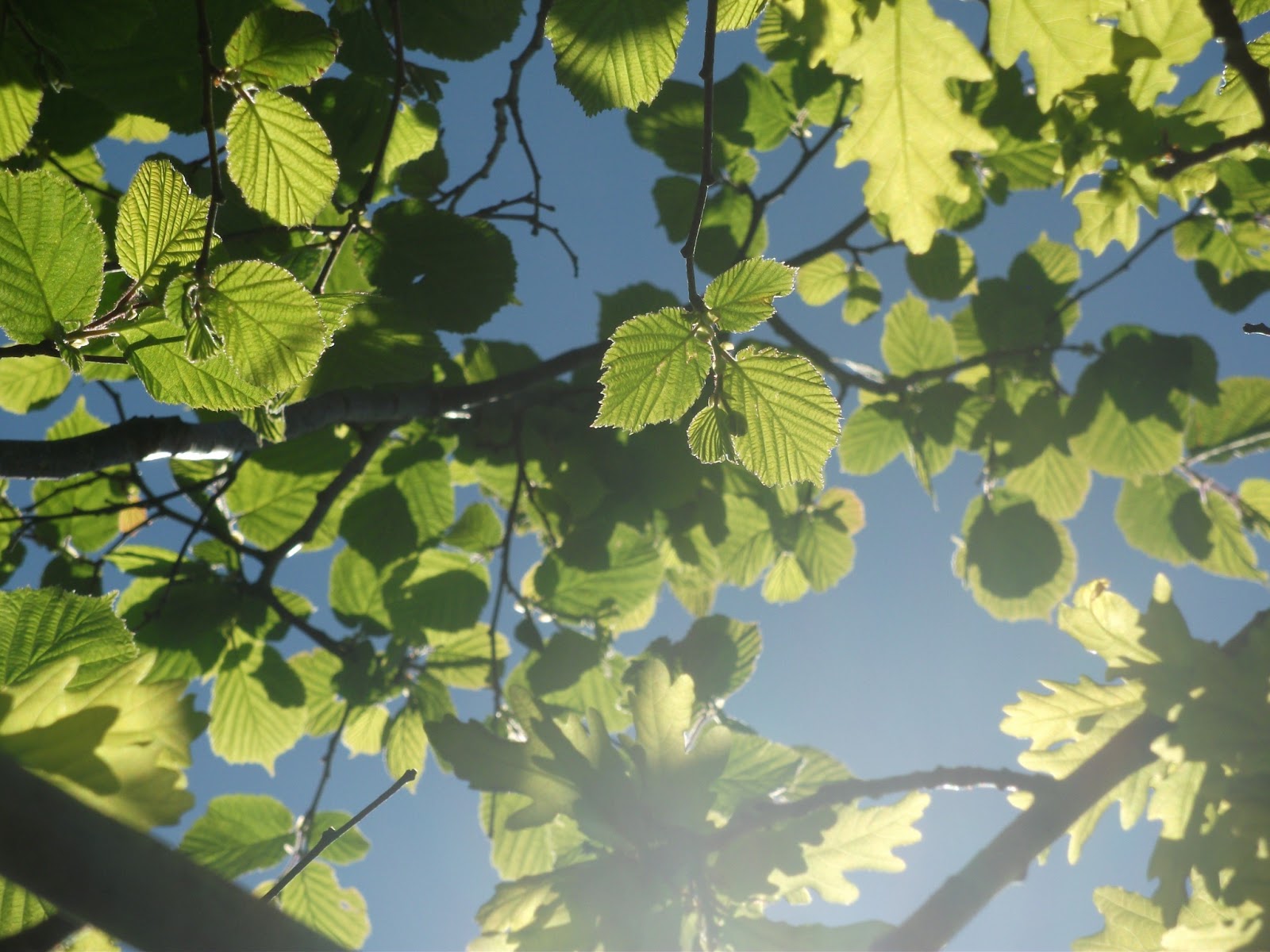
Showing posts with label summer. Show all posts

Thursday, 1 August 2024

Lughnasadh/Lammas/Calan Awst Blessings


Today the Harvest season begins, as an abundance of sun-ripened fruits and grains begin to become available in garden, field and hedgerow. Traditionally it was a time of hard work (cutting, gathering in and processing the harvest), but also a time of community, co-operation and ultimately celebration once all the work was done and people knew they had enough food stored away to see them through the coming winter. 


Yet the season is also tinged with sadness. One recurrent theme in harvest folklore is that of sacrifice - the notion that the spirit of the corn is sacrificed when the grain is cut. Many customs are ways to honour this sacrifice, or they provide the spirit of the harvest a safe place to reside over the winter months until next year's seeds are planted and the cycle begins anew. 


And of course, the culmination of summer inevitably means that autumn is beginning to edge in. Just as at the festival directly opposite Lughnasadh on the Wheel of the Year, Imbolg, one can feel the pulse of the land beginning to stir even though (apart from snowdrops) there is little visual evidence, at Lughnasadh if you drop your consciousness down and feel into the land you can sense it beginning to relax and make itself ready for the coming season of rest. 


How will you be celebrating Lughnasadh this year? I will make some bread, pick some blackberries and give thanks for all that I have so far harvested this year - after all, it's still just the beginning of the harvest and many blessings still await us.


Thursday, 1 June 2023

The Month of The Rose


It's June, the month of the rose. I have been working magically with roses and their scent a lot over the last couple of years. I find their fragrance soothes, heals, nurtures. My work with rose has been to do with self-love and self-care, both of which can be a challenge for me! Taking time to sit with rose, meditate while inhaling her fragrance, drink rose-petal or rose-hip tea, cleanse and anoint myself with rosewater, light a rose-scented candle whilst enjoying some quiet me-time... all these things help to calm and centre me, whilst reminding me to take care of myself. 


Rose is heart-healing medicine in the emotional sense. I work with her to refill myself when I've been pouring from an empty cup for too long, and restore my emotional equilibrium. Roses have soft, gentle petals, generous blossoms and nourishing rosehips but they also have strong stems and defensive thorns. Rose is sweet and generous, but no pushover. She reminds that self-care is not only about softness but also about boundaries.


I wish you could smell the gorgeous fragrance of this particular rose, it's absolutely wonderful. Perhaps you can go and find a fabulous rose of your own to sweeten your day. 

Friday, 13 August 2021

Embracing Autumn: Sensing the Shift


One thing that fascinates me at this time of year - the time of one season slowly transforming into another - is that very process of transformation. When is the first tiny intimation of Autumn felt? When does the upward zigzagging flight of butterflies metamorphose into the earthbound tumble of leaves? When does Summer cease and Autumn take over completely? How does the energy of Autumn compare to the energy of Summer? What are the subtle clues to this seasonal alchemy?


It's partly the changing palette of the landscape as the lively green of summer dulls and ripens to khaki, gold and brown punctuated by late summer flowers in purple, orange and gold and ripening seedpods and berries. The air is scented with fruit more than flowers, with dust and dew and leafmould. The nights have an edge of chill, the days grown noticeably shorter than at the peak of Summer in June. The soundscape of birdsong changes as the emphasis changes from attracting a mate to marking and defending a territory, or preparing for migration to warmer climes. Each little incremental change - changes so small and subtle that they often pass unnoticed by our conscious minds - tips the balance a little more until seemingly suddenly it's fully Autumn.

Embracing Autumn: Sensing the Shift
Take a few minutes each day to notice the subtle changes in the world around you as the energies of Autumn grow stronger. Sniff the air. Note the changes in the greenworld. Listen to the new songs of the birds. Feel the waning strength of the sun on your skin. Tune into the rhythms of the Earth beneath your feet. Feel how the pulse of Autumn differs from the pulse of Summer. Try to determine when the tipping point occurs, when the last of Summer finally evaporates and Autumn fully establishes itself. 


Thursday, 30 July 2020

Celebrating Lammas During the Pandemic


Although restrictions have eased since I wrote about celebrating Beltane and Summer Solstice in lockdown - and most places in the UK are not actually in lockdown any more - the ongoing pandemic means full scale gatherings for  Lammas rituals and celebrations aren't possible. Up to date guidelines for your area may be found on this Government website - please check and ensure you are adhering to the rules.

Nevertheless, as with the previous two festivals with a bit of imagination it's possible to celebrate Lammas in memorable style. As before I have suggestions for a variety of situations - even though many of us are now able to resume a kind of normality in our lives, there are still people who need to protect themselves by shielding, so there are suggestions for those who are able to get out and those who are not.

Ideas for celebrating Lammas in the countryside or at the beach/park
  • If the weather is fine, this would be a great opportunity to visit a local sacred site, stone circle, megalith or holy well. The big famous sites will probably be awash with visitors, but smaller more obscure sites need love too, and the lack of crowds often makes them far more atmospheric, and allows the space and time to really connect on a deeper level. Take a small posy of flowers from your garden as an offering (not cellophane wrapped ones from the local supermarket or garage!) for the genius loci.
  • If you are able to visit a beach, trace a spiral large enough to walk in and out of in the sand. Walk it slowly and mindfully. On the inward journey concentrate on all the plans and projects you have put energy into in the last year. What seeds have you sown and how have they grown? When you reach the centre pause and survey your harvest. What has come to fruition? What still needs more work? Give thanks for all that you have achieved. As you slowly walk back out of the spiral, concentrate on where you will concentrate your energy for the next year. What will you hope to be harvesting by this time next year? 
  • If you enjoy foraging for wild foods, take a walk and gather some ingredients for a Lammas feast. Wild plants to look for at this time of year include bilberries, the first blackberries, wild strawberries, chickweed, fat hen, mallow, rowan berries and sea beet.
  • If you are visiting a beach with your family, why not have a beach-art competition? You can sculpt sand, pile rocks, and beach-comb for shells, driftwood, seaweed and other shoreline treasures to use in your creation. Here's some inspiration for you...

Ideas for celebrating in your garden
  • If you've been growing your own fruit and veggies, Lammas is the perfect time to celebrate with a harvest feast, preferably al fresco.
  • Lammas is traditionally a time to get together with your community and share the harvest. That's not so easy at the moment - and really, I'm of the mind that it's better to be cautious and limit social contact in order to stay safe and beat back the virus. But with a bit of common sense and appropriate hygiene/social distancing measures it should still be possible to share any excess home-grown fruit, veggies and herbs with your neighbours. If you don't grow vegetables you could gift them with a bunch of flowers. Or how about baking a batch of cupcakes, brownies or muffins and leaving little anonymous gift-wrapped parcels of yumminess on your neighbours' doorsteps?
  • Traditionally corn dollies were made at this time of year. The spirit of the corn was thought to reside safely in them through the cold winter months. In spring, the corn dolly would be planted along with the new seeds and the cycle would begin anew. Make your own corn dolly using wheat straw (you can buy it online from craft suppliers) or even long stems of  dried grass. There are instructions for making simple corn dollies here, or look online for video tutorials if you would like to try something more elaborate! If you would like to keep the spirit of your garden safe indoors through the winter you could use flowers or herbs with long stems as a stand in for the wheat. Hang the finished garden spirit dolly up to dry somewhere cool and dry with good air circulation, and then keep it safe all winter on your altar before returning it to the soil in the spring. 
  • Make a mandala of food stuffs which you can leave out as an offering to the local wildlife. You could make the centre a bowl of water (but put a few rocks in it so that any insects or small creatures that fall in can climb out again).


Ideas for celebrating in your home
  • Get baking! Lammas literally means 'Loaf Mass', i.e. the celebration of the first loaf baked from the new grain harvest. There are hundreds of bread recipes to be found online, and you can also experiment with your bread by adding ingredients like chopped herbs, olives, cheese, spices, or chilli. If you don't have any yeast you can make soda bread, using bicarbonate of soda as the raising agent. Any flour-based baked goods are appropriate at this festival, so as well as making bread - make a cake, or biscuits, brownies, cookies, crumble or a pie.  If you have a gluten intolerance, there are gluten-free flours available and plenty of gluten free recipes online to inspire you.
  • Make a small harvest altar to give thanks for your personal harvest this year. This may be a literal harvest of home-grown fruit and vegetables or it may be the things you have achieved such as a new skill, a job, promotion, qualification, initiation etc. It could also be the new friendship(s) you have made, the poem you wrote, the happy times you have shared with your children. What have you achieved, made, learned or gained this year? What are you grateful for? What would you like to give thanks for? Find items which literally or symbolically show your harvest for this year. Say a few words of gratitude, to the Universe, to your Gods/Goddesses, to your magical allies - and to yourself, for all you have worked for and achieved this year. Blessed Be!
  • As always there are online Pagan celebrations that you can join. The Glastonbury Goddess Conference is online this year and runs over the Lammas period. There is an online Lammas Full Moon Shamanic Journey Circle here. If you're on Facebook, this is a useful group to keep tabs on Pagan events both online and off. 
  • Trance into the Empress card of a tarot deck. The Empress is the Mother Earth archetype, all about abundance. Create sacred space in your preferred way, ground and centre yourself. Sit looking at the card, allowing your gaze to become soft and unfocused. Imagine yourself walking into the card and approaching The Empress. What will you say to her? Do you have questions to ask her? Does she have a message or a gift for you? Who or what else do you find within the card? When you are ready, thank The Empress - and any other beings you may have interacted with - and exit the landscape of the card coming back to yourself where you sit. Take a few moments to write down your impressions of the card and any messages or gifts you may have received. Make sure you are fully back and grounded - eat something if necessary (food is very grounding). Open your sacred space.
May we all have a sweet and blessed Lammas, and may your harvest be bountiful. Blessed be. 


Wednesday, 8 July 2020

Midsummer Herbs: Meadowsweet and St John's Wort


At the height of summer, two wonderful healing herbs are blooming spectacularly in the hedgerows and meadows around Halfway Up A Hill. I plan to pick and dry plenty of both to take us through the coming months. 

The first is Meadowsweet, whose froth of sweetly fragranced flowers never fail to delight me when they begin to appear. Meadowsweet has such a soft, gracious gentleness, yet it is balanced by an enduring inner strength, a calm serenity. If Meadowsweet was in human form, she would be exactly the person you would want around in a crisis. She'd mop up the mess, fix, calm, soothe, hold your hand, make you a cup of tea and pop a casserole in the oven before quietly slipping out the back door without any fuss. 

Meadowsweet contains salicylic acid, one of the active ingredients in aspirin, and in fact the word 'aspirin' is derived from the old Latin name for Meadowsweet, Spirea ulmaria (the Latin name for the plant has subsequently been changed to Ulmaria filipendula). Unlike aspirin, which is notoriously harsh on the stomach, Meadowsweet has a gentler action and so can be taken for headaches accompanied by upset stomach - the perfect hangover cure! Just yesterday, IB was suffering from a bad headache and I made him some Meadowsweet tea from fresh leaves and flowers which really helped. The flowers have a sweet, slightly almond-y fragrance with the merest hint of a medicinal undertone, and the chopped leaves smell fresh, a bit like a new-mown grass or hay, so it's a pleasant tea to drink. Of course, if you are allergic to aspirin or it's contraindicated for you it's best to err on the side of caution and avoid Meadowsweet too. 

The flowers can also be used in the kitchen in many of the ways you'd use Elderflowers - to make cordial, champagne, flower fritters, to flavour beer and mead, or as an addition to fruit desserts and jams. Strangely they seem to come into flower just as the Elderflowers are fading, very helpfully extending the season.

In bygone days the dried herb was used as a strewing herb, scattered on the floors of houses along with other pleasant smelling herbs and rushes to make the home smell sweet and deter pests. It is said to have been one of the favourite strewing herbs of Queen Elizabeth I. I wonder if it might be nice to update this idea by using it in pot pourri? 

Meadowsweet was one of the three most sacred herbs of the druids, along with Water Mint and Vervain. Perhaps that's why Math and Gwydion chose Meadowsweet as one of the herbs used to create Blodeuwedd (whose name means 'flower face') as a wife for Lleu, in the Mabinogion.
  

The other herb is sunny St John's Wort, probably the most solar plant I can think of (with the possible exception of Calendula and Sunflowers). The flowers even look like little yellow sunbursts, and its name is due to the fact that it generally begins to flower around St John's Day (24th June), a few days after the Summer Solstice. The small oval-shaped leaves are packed with little oil glands which secrete powerful healing compounds. If you're not sure if you've got the right plant, hold a leaf up to the light - you should be able to see what appear to be little translucent perforations on the leaf. These are the oil-secreting glands, and they give the plant its Latin name, Hypericum perforatum. And speaking of names, there are a number of plants in the Hypericum family which get called St John's Wort, potentially making things confusing - this is why knowing Latin names of plants can be so important! For the purposes of this blog post, I'm talking about Common or Perforate St John's Wort. 

St John's Wort has become well-known in recent years as a herbal treatment for mild to moderate depression (studies show it's less effective for severe depression), and I find it interesting that this radiant little plant can literally chase away the dark clouds of depression and let the light back in for some people. I wonder if it's particularly useful for those suffering SAD (Seasonal Affective Disorder), which strikes in the dark days of winter?

Another strange sun-related connection: one of the possible side-effects of taking St John's Wort is photosensitivity, which means it can cause the skin and eyes to become more sensitive to sunlight thereby making some people susceptible to sunburn and eye damage. It can also have other side-effects such as gastrointestinal problems, dizziness and headache, and can disrupt the effects of some prescription drugs such as the contraceptive pill, anti-psychotics, and some cancer and heart medications. So check with  your GP or a qualified herbalist to make sure St John's Wort is suitable for you before taking it.

Although St John's Wort can make you more susceptible to sunburn, paradoxically an oil made from the plant is a great topical salve used for burns and wounds, to heal scars and to treat nerve pain such as sciatica. I made some last year by filling a sterilised glass jar with a tightly fitting lid, with the flowers and leaves and pouring over grapeseed oil. I left the jar on a sunny windowsill for a few weeks, and the oil gradually became a gorgeous deep red colour as the active ingredients infused into the carrier oil. If you would like to try this yourself, it's important to ensure the plant matter is fully covered by oil, as any that's left protruding above the surface will become mouldy and spoil the oil. When the oil has finished infusing, strain out the herb and store the tightly closed jar in a cool, dark place. As far as I know topical application of the oil doesn't increase photosensitivity, but to be on the safe side I don't use it on skin that will be exposed to sunlight.

In folklore, St John's Wort was seen as protective and hung above doorways and windows to protect the inhabitants of a house from evil spirits, or worn on the person as a charm. 


It's raining right now, so I'll wait until the sun comes out again before going out to collect my herbs. As the weather is due to take a turn for the better in the next couple of days I will have plenty of chance to gather and dry my midsummer herbs. In the dark depths of winter I'm sure I'll be glad that I did!

***

N.B. I am NOT a medically trained herbalist, so this post is not intended as medical advice. Please consult a properly trained herbalist if you need advice. 

Please also don't take any chances if you're not confident of your plant identification skills. Check with someone who really knows their stuff. And the golden rule is: if you can't be 100% certain you've got the right plant, walk away! 

Thursday, 2 July 2020

Rosepetals, Radishes, Rain and Repose


June in lockdown. Life here at Halfway Up A Hill is slow-paced, quietly satisfying as we work in the garden and enjoy the unaccustomed luxury of plenty of time together. Just us, the cats, the chickens, the earth and sky. As you can see from the picture above, Mandrake has been fully embracing the tranquility. 


The garden is gloriously full of flowers, the air deliciously sweetened by roses and elderflowers, honeysuckle and meadowsweet. Everything is growing abundantly, nurtured by sun and rain.


Ah yes, the rain... it has been very enthusiastic at times. But we have had plenty of warm sunshine too, so our crops in the vegetable patch are coming along beautifully. I'm pretty sure I can see them growing by the minute.


Last night we ate this delicious salad of lettuce and mixed salad leaves, spring onions, radishes, snap peas and mangetouts. All home grown.


Mandrake reckons we're pretty lucky. I'd have to agree.


Saturday, 20 June 2020

Solstice Magic: The Tale of the Dancing Weasel


One Summer Solstice morning, many years ago, T and I set off to watch the sun rise from a nearby hilltop. As we were still living in Essex at that time, there weren't an awful lot of hills to choose from, but we had carefully scouted out some east-facing fields in an elevated position that we hoped would give us a good vantage point.

It was still dark when we rose and threw on some clothes in preparation for our adventure; I grabbed a small pack containing a few ritual tools and some food and drink. We made our way out into the pre-dawn quiet and found our way into the field by torchlight, waiting expectantly in the damp chill. When the much anticipated sunrise came, it was an anticlimax. Instead of the bright golden rays I had expected, clouds blurred the horizon and the sky lightened slowly into a disappointingly grey and indistinct dawn.

Nevertheless, it was still the Summer Solstice: I drew the items I had brought with us from my pack, murmured a blessing and made a small offering to the sun, including some fruit and a small libation of mead which I left at the edge of the wheat growing in the field. We sat to eat some food ourselves and that was when the magic happened...

A movement at the edge of the wheat, close to where I had left our offering caught my eye. Only a few metres from where we sat, a small weasel appeared - apparently unafraid - and eyed us curiously. We both froze, not wanting to scare it away. The slender animal sniffed the air, completely unperturbed by our presence. Suddenly, it leaped into the air, twisting its long lithe body mid-air into a kind of somersault, landed with perfect agility and shot back into the wheat - before immediately running back out again, doubling back, leaping and twisting and capering in what appeared to be a joyous gymnastic dance. We held our breath as the weasel danced an exuberant celebration of life for precious moments, until suddenly it disappeared back into the standing wheat, and we were back in the everyday world of a grey June morning.

I have heard that weasels 'war dance' to confuse their prey before attacking, but there were no prey animals around. Perhaps it was a young animal practising and honing its hunting skills. But I like to think on that Solstice morning it was just dancing for the sheer delight of it, in celebration of life and summer and all that's good.

We may not have witnessed the awe-inspiring sunrise we had hoped for, but instead we experienced something more amazing and magical than we could have imagined. It felt like a special blessing, something I'll never forget. Moreover I learned something very important that day: The magic you go looking for may not be the magic you find - but that's all part of the magic.

May you find your own magic this Summer Solstice. Blessed Be!

Friday, 12 June 2020

Celebrating the Summer Solstice in Lockdown


The Summer Solstice, or Litha, this year falls on Saturday 20th June, (astronomically it varies between 20th and 22nd June). Although some restrictions are being relaxed, by and large we will still not be able to gather to celebrate, a fact I am happy to accept in order to keep people safe. But it does mean we'll need to be creative and adaptable in how we mark the occasion, just as we were at Beltane. Many of the suggestions I made in that post can be adapted for the Summer Solstice, but here are a few additional ideas too. As before I've grouped them depending on a variety of lockdown/isolation situations.

If you are able to get out to the countryside/beach/park


  • One of the simplest and most memorable ways of celebrating the Summer Solstice is to go and watch the sunrise from an east-facing hill or a beach near your home. You can check sunrise times in the UK here, and there are other online resources that give the times for other parts of the world. There is something really magical about experiencing the world awake to a new day as the sky gradually lightens, the dawn chorus begins and the sun appears over the horizon. Take a small picnic breakfast to celebrate this special day, and don't forget to leave a small offering of food and pour out a little of your drink for the spirits of the place.
  • If you are confident of your plant-identification skills you could take a walk and forage some wild plants for a Summer Solstice feast. Plants to look out for at this time of year include wild strawberries, chickweed, elderflowers, sea kale, fat hen, linden blossoms and honeysuckle flowers.
  • If you can't travel to sacred sites such as Avebury or Stonehenge for the Solstice, do a little research to find sacred sites in your local area that you may be able to visit instead. Many of these smaller, less well-known sites have an amazing atmosphere and are all the more special for not being crowded with visitors.


If you have access to a garden or small green space


  • It's a great time of year for roses, and if you have some in your garden take this opportunity to really appreciate their beauty and fragrance with a small ritual. Gather some petals - the more perfumed the better - and make yourself some rose petal tea. Remove the thicker white base of the petals (where they attach to the rest of the flower) as this can be bitter. Steep the petals in boiling water for a few minutes, then sweeten with a little honey if liked. Sit in the sun to drink your brew, inhaling the fragrant steam and feeling the warm sun on your skin. Let the warmth and fragrance spread through your body. Take a moment to imagine your heart as a rose in your chest, gradually unfurling its petals and opening to the sun. Raise the cup in your hands as a toast to the sun, the source of all light and energy. Feel yourself blessed. 
  • If you have children, throw a special 'Sun Day' party for the family. Decorate the house and garden with sunny colours, get the children to make sun-themed art and get everyone to dress in sun-themed clothes (yellow, orange or gold coloured, sparkly, or their favourite summer clothes). Have a sunny foods feast - make yellow cupcakes, drink orange juice or home made lemonade, have a barbecue, eat ice cream, enjoy slices of watermelon... and later on as the sun sinks in the sky, share toasted marshmallows round a fire. 
  • Make a small sun altar, if possible in the South corner of your garden. Here you can put sun-themed garden decorations, solar-powered lanterns and grow plants ruled by the sun - like sunflowers, marigolds, St John's wort, chamomile and rosemary.   


If you are confined to your home/can't get outside


  • As has been widely reported, English Heritage have cancelled the sunrise celebrations at Stonehenge this year, but they will be livestreaming the sunrise at the stones on social media.
  • Make a sun-catcher to hang in your window to honour the sun and send rainbows dancing across your walls. There's the story of one I made here to get you started. All you really need is some sparkly things - crystals, beads, sequins - and some wire and/or thread to hang them from. Just be careful not to use any convex glass pieces/balls/marbles etc which could focus the rays of the sun and potentially start a fire.
  • Honey is already a very 'solar' substance, as it is concentrated nectar from flowers. Charge a jar with the power of the sun by placing it on a sunny windowsill for a day. Then use your sun-powered honey to give yourself a boost of sunshine by adding to recipes or in your tea on those days when you need a little extra lift.   


Happy Summer Solstice everyone! Stay safe and have a wonderful summer. 


Saturday, 30 May 2020

The Colours of Summer


I love the colours in my garden at this time of year. The dark purple-blue irises and aquilegia are the perfect backdrop for a bright splash of sunny yellow Welsh poppies. Add the delicate lilac-pink of chive flowers and a sprinkle of blue and pink hardy geraniums for the most gorgeous early summer palette.


Monday, 30 July 2018

Lammas or Lughnasadh?


Lammas or Lughnasadh (pronounced LOO-nah-sah) is generally celebrated by Pagans on 1st August, a date pretty much midway between the Summer Solstice (aka Litha) and the Autumn Equinox (aka Mabon). Many of us use the terms 'Lammas' and 'Lughnasadh' interchangeably (I am guilty of this myself). So what exactly is the difference between the two?

In many ways they are the same festival. Lughnasadh is the Gaelic name for this date, and literally means 'Lugh's Gathering'. Some people have interpreted the nature of the Gathering as a wake for the God Lugh, in his role as a sun deity - the summer sun now beginning to wane as the days begin to shorten as we move further away from the Summer Solstice when the sun's influence was at its peak - and others as a celebration of His wedding. What is certain is that Lughnasadh was marked by great gatherings of people (often high on hills or mountains or at holy wells), celebrating the harvest of the 'first fruits', feasting, matchmaking and athletic competitions. 

Lammas is the Anglo-Saxon name for the festival and is a contraction of the words 'Loaf Mass' and also celebrates the harvest of 'first fruits', in this case specifically the beginning of the grain harvest. The first loaves baked from the new crop of wheat, barley or rye would be taken to church to be blessed.

Lughnasadh has more obviously ancient roots and may therefore appeal more to purists, Lammas has the advantage of being easier to spell and pronounce! Or there's the Welsh name for the festival, Gŵyl Awst, (pronounced Gool OWst) meaning 'August Festival'. Either way I think in this case unless you are following a specific Tradition whichever name you use is fine, rather like Samhain/Hallowe'en. Yes, they do have different overtones but as long as people get the general gist of what is being spoken about it probably doesn't matter too much to most of us.

What does matter is the meaning of the festival. It is a time for celebration - community gatherings, reaping the results of hard work, the beginning of (hopefully) a time of plenty for all. But interestingly it is tinged with sadness too. The sun is beginning to wane, the end of the summer (though still at a distance) is beginning to be glimpsed. The God of the Grain, in order to feed His people must be sacrificed. Just around the corner is winter - will it be harsh? Will there be enough of a harvest to ensure the community can get through the long, dark days? No wonder our Ancestors gathered together to celebrate while they could, to give thanks for the harvest gathered in. 

Nowadays most of us are lucky enough to have food security, yet it is still a good time to pause and count our blessings. One way our local Pagan community has often celebrated this is with a 'Basket of Abundance' at our Lammas ritual. Everyone brings a small, wrapped gift (or gifts) to put into the basket and during the ritual it is passed round for everyone to draw something out (it's a bit like a Pagan 'Secret Santa'!). If you don't have a group to celebrate with you could still have fun giving out little token gifts to your friends and family. If you're a gardener and have excess fruit and veggies, or flowers and herbs, you could take some round to your neighbours. Or a lovely idea would be to donate food to your local Food Bank, or a few hours of your time volunteering at a homeless shelter. Or you could give unwanted items to your favourite Charity Shop, or tins of dog/cat food and old blankets to an animal shelter. In these times of (relative) plenty and security, let's share our abundance with those who need it.

Blessings of the harvest to you!


Thursday, 24 May 2018

Soul Food


“In the Craft, we do not believe in the Goddess ~ we connect with her; through the moon, the stars, the ocean, the earth, through trees, animals, through other human beings, through ourselves. She is here. She is within us all” 
― Starhawk

I make a pilgrimage every year to the bluebell woods. Not far from Halfway Up A Hill is a patch of beautiful woodland. It's privately owned, but the owners are generous enough to share their little patch of heaven, and every year when the bluebells bloom they open up the woodland to the public. To me it is a magical, sacred place. I look forward to my visit every year, it has become part of the way I celebrate the Wheel of the Year.

Bluebells are quite possibly my favourite flower: I love their colour, their scent; I love the time of year they appear; I love their woodland habitat. My annual visit to see them feeds my soul. I visit them with friends, with family, alone. I have visited on cool, damp chilly days and on brilliantly bright warm sunny days. But it is unthinkable to not visit at all. No matter what else is happening in my life, I make time to visit the bluebells.

The woods are approached through a bright sunny meadow. The owners have cut a path through the meadow, fringed with all kinds of wildflowers. I follow its gentle slope down towards the woodland's dark edge, and as I get closer the scent of bluebells starts to waft around me. I slow my pace, aware that I am approaching a holy place. At a gap in the hedge at one corner of the meadow I step through into an enchanted world. A sea of blue flows all around me, and early summer light filters down through tender new leaves of oak and beech, hazel, birch and hawthorn. Paths meander through the trees, and I step carefully, trying not to crush any flowers underfoot. It seems sacrilegious to damage such beauty in any way. As I walk slowly, mindfully placing each step, I breathe deeply, trying to inhale the essence of the place. At points along the path I stop and sit for a little while, listening to the sound of the woodland all around me. Insects buzz, the breeze ripples through the treetops, birds sing - wren, robin, chaffinch, chiffchaff, blackbird - and the sound of cattle, sheep and human activity drifts over from the nearest farm. I notice how, when I sit still and silent, the birdsong intensifies nearby as though having decided I pose no threat, normal service has been resumed. At one particular sitting place I am thrilled to hear the whirring of small wings directly behind me. I hold myself as still as possible, desperate to turn and see which tiny bird has dared to land behind me but knowing that as soon as I move it will fly away. 

I try to still my mind too, letting thoughts drift away like the clouds above the treetops, trying to open and receive whatever the bluebell wood has to offer me. I feel it as a gentle healing energy, which soothes and nourishes my soul. I want to stay and bathe in it forever, and yet I know that I will have to return home before long - visiting time ends at dusk - and that the bluebells will not be here much longer. There is perhaps another week before they fade, begin to set seed and their blue-purple glory is over again for another year. So I drink it in while I can, feed my soul on this peace and beauty while I can. It is enough - until next year. 


Monday, 8 September 2014

Reflections from the Cusp


We seem to be teetering on the cusp of Summer-into-Autumn at the moment. It is September already (how did that happen?) but as yet the days are warm and sunny even if the mornings are shrouded in mist and have a nip to them. No frosts yet, thank goodness.

It has been an amazingly busy summer, with much fun and celebration (parties, outings, picnics, a wedding complete with fancy dress!), plenty of sunshine and lots of hard work, both at home and in setting up a new business (or possibly two). Life is good at the moment.

And for once I am looking forward to the onset of autumn proper. Perhaps it is because we have actually had a decent summer for the last two years. But I am eagerly anticipating snuggling into cosy jumpers, warm nights around the fire, kicking through fallen leaves, making my favourite soups, roasting chestnuts...

Summer, don't be in a hurry to leave. But Autumn, I am looking forward to greeting you once again, old friend.

Tuesday, 4 June 2013

Greendazzled


I am in love with the Green. Perhaps because it was so long in coming this year, now that the Earth is fully flooded by spring and newness and life, everything seems so intense. The leaves are so green, the sky is so blue, the grass is so long and lush. So many flowers, so much birdsong and bumbling of bees.


At work, I gaze out through windows into the beauty of the world and long to be outside, wandering under trees and feeling the roughness of bark, the tenderness of new leaves beneath my fingers. As I drive the car my gaze is caught and held by the beauty of every flower-clustered hedgerow, and it is hard to concentrate on the road ahead of me. Driving under hanging branches I catch glimpses of woodpeckers, sparrowhawks, finches, jays. Butterflies zig zag across the sun-soaked meadow. A shaggy-maned horse munches contentedly in a field bright with buttercups.


I want to leave the human world and dance in the meadow with the butterflies. I want to ride bare-back on the shaggy maned horse until I have lost my way. I want to wander through woods where pools of spreading bluebells cascade down the hillside into a foam of Queen Anne's Lace. I want to tiptoe through moth-fluttered twilight and sleep the night away on a bed of moss, watching the stars through branches of oak and beech...

It is intoxicating. I am faery-led. I am drunk on spring. I am greendazzled.

Thursday, 20 September 2012

Harvests - The Good, The Bad and The Wonderful


We are almost at the Autumn Equinox, that magical point at which day and night stand equally balanced before tipping into the dark half of the year. That is one reason Pagans mark this time of year with ritual. Another reason is that we are slap bang in the middle of the harvest season, which begins at Lammas or Lughnasadh and goes on until Samhain. Lammas is celebrated in high summer, at the beginning of August when the grain harvest usually begins. Samhain comes at the end of October, when farming communities traditionally brought their livestock down from the hills into more sheltered pastures and culled old or weak members of the herd. The culled animals would provide meat for a celebratory feast and this would also be salted down or cured to provide food through the coming winter months.

Autumn Equinox, or Mabon as some like to call it, is a time for harvesting the abundant fruit and nuts available as summer gives way to autumn. Apples, pears, late plums and damsons, squashes and pumpkins, blackberries, autumn-fruiting raspberries, quinces, hazelnuts, elderberries, haws, and sloes... The summer crops of potatoes and onions should be dug by now and safely stored somewhere cool, dark and dry. Then there are mushrooms to be foraged and the last of summer's bounty to be stored away in jams, jellies, pickles, cordials, wines, syrups and chutneys. And of course, seeds of flowers, vegetables and fruit can be saved for sowing next spring.

Unfortunately the fruit and vegetable harvest at Halfway Up a Hill is rather meager this year. The vegetable patch has been somewhat neglected as I no longer have as much time to devote to it, and much of the fruit harvest is disappointing due to the terrible weather we've had this summer negatively affecting pollination rates. There are no damsons at all and my usually reliable cooking apple has only three fruits, comparing miserably with the fine harvest we had last year. Even the elderberry crop is sparse. Defying all expectations though, the tomatoes have done pretty well and continue to produce, and there is an extremely heavy crop of haws in the hedgerows.

Our modern estrangement from the natural world to an extent insulates us from the extremes of food shortage that we could expect from such a cold, wet summer. Food  prices may increase, but there will still be plenty to choose from at the local supermarket, greengrocer or market stall. We are so lucky in the Western world, and we so often take that for granted.

But we are also lucky to have the wonderful human spirit of altruism, generosity and the instinct to share in times of plenty - in times of scarcity, too. Just this week I have been gifted with some homegrown runner beans, a big fragrant bunch of sweetpeas, a pretty oriental fan and a jar of redcurrant and blackberry jelly by different people. In the last year I have been given rhubarb, plants, vouchers, magazines, a vintage radio for restoration, cucumbers, fabric, kitchenware, a computer that needs fixing, yarn, a large amount of firewood and items of clothing by friends, family and neighbours; they have also gifted me freely with advice, expertise and various skills that I lack when I've needed help. I myself have passed on books, surplus eggs, incense, my old car, toiletries, magazines, perfume and homemade jam. I have borrowed a wall-paper steamer/stripper, a router, a tile-cutter, a mitre saw, and have lent out a bagful of DVDs, my carpet-shampooer, a dehumidifier, my pressure-washer and books. And I have done lots of liftsharing!

Since T left, money is a constant issue. I receive alimony, but it decreases each year and will end altogether in a couple of year's time. I am now working, but I don't seem to earn enough to manage without the alimony. And as we find ourselves in the middle of a recession with no end in sight - no matter what the politicians say - the cost of living increases almost daily. Money - or lack of it - is now a permanent worry at the back of my mind.

But in this time of balance between summer and winter, light and dark, abundance and scarcity, I breathe and choose to remember that it is true that the best things in life are free. I choose to remember that I am part of a community of friends, family and neighbours who look out for each other, share what they have and help when they can, just because that's what we humans do for each other. I choose to remember that co-operation is more important than competition. I choose to remember that abundance and money are not the same thing. And most of all I choose to give thanks for the harvest of my many blessings, which are priceless.


Thursday, 30 August 2012

After The Storms...


The world seems washed clean by the torrential rain of recent days. The sky is finally clear blue, and a brisk wind chases away the last vestiges of storm clouds. In the late summer sunshine, the colours of the countryside seem to sparkle.

As the chickens scratch contentedly on the lawn and clean washing on the line dances in the stiff breeze, the world seem bright and fresh and new. At the end of summer, when it might be expected to seem that things are on a downward slide to the introspection of winter, there is a sense of optimism and newness and possibility. It seems to me it ought to feel jarring, but all I feel is anticipation and happiness.

And it's not just the weather. In the last few days I have heard news of the safe delivery of a friend's first baby; not one but two engagements have been announced; happy new relationships are springing up seemingly out of nowhere. And I have received an invitation to the wedding of my beloved Goddessdaughter next summer.

Happiness and fresh starts seem to be springing up everywhere like wildflowers. Hurrah! Long may it continue!


Wednesday, 22 August 2012

Scent Memories


I have written before on the way scent conjures powerful memories. Today I experienced that phenomenon again. Although it's happened to me many times before, I still find it amazing.

There are many plants I don't even try to grow at Halfway Up A Hill. They are way too attractive to slugs, and believe me, the slugs and snails here are voracious. My usual gardening strategy for ornamentals is to grow the things slugs find unpalatable, so that I only have to concentrate my slug-control measures in the veggie patch. Thus my cottage garden is filled with hardy geraniums, penstemons, lady's mantle, aquilegia, foxgloves, astrantia, woody herbs and roses, and I'm quite cautious about wasting my time and money trying anything else.

But this year, a friend gifted me with some clumps of mixed seedlings that had self-seeded in her polytunnel. An eclectic mix of dill, cornflowers, tomatoes, nasturtiums, morning glories and French marigolds. I planted them with minimal protection, with a 'They'll either thrive or not' attitude. The dill was the first casualty, succumbing to the sluggy hordes almost overnight. The tomatoes were probably passed on a bit too late to produce much of a crop, but to my amazement they haven't succumbed to blight yet either, so if we're lucky enough to get an Indian summer they may come up trumps. The nasturtiums, cornflowers and morning glories are romping away. I haven't grown either of the latter two before but all three are now added to my list of slug-proof plants worth growing again. The French marigolds - which from past experience I fully expected to be razed to the ground in short order - actually seemed to be doing OK, and even when the slugs tracked them down, a brief slug-control patrol in the evening seemed to be keeping things within acceptable limits. The bright orange of their flowers looked wonderful with the brilliant scarlet nasturtiums and the glorious blues of the cornflowers and morning glories. So far so good.

Unfortunately the slugs stepped up their attack on the marigolds and today I finally had to admit defeat and pull out the last remaining marigolds after their main stems were severed overnight. I salvaged as many flowers as possible and brought them back to put in a jar of water. At least they will brighten the kitchen windowsill for a few more days.

I stripped the leaves from the stems, and the scent released by the crushed foliage brought memories flooding back. At the age of twelve I was given a small patch of ground outside my bedroom window as my first garden. At a summer fete in the village I bought a tray of French marigolds - I think they were actually the first flowers I planted there. Suddenly I was twelve again, digging over the soil in that small patch, earthy hands carefully tending the marigolds, a chamomile plant, some mint, and the 'Wargraves Pink' hardy geranium, bought at the same village fete and from which I still have a cutting to this day growing against the wall of the workshop.

I hadn't thought of that garden for a very long time, but the smell of marigold leaves brought it all back so clearly. How amazing that our senses can do this for us. Our bodies and brains are such wonderful things!

P.S. I know the photo isn't actually a French marigold, it was the closest I could find!

Saturday, 12 November 2011

Avalon Spring 2012


Avalon Spring 2012 will be held 5th-9th June at a gorgeous venue near Glastonbury, Somerset. This year we will be working with the Diana/Aradia/Lucifer myth - I can't wait! Full details may be found on the website. I'll be going - see you there?

Saturday, 27 August 2011

ThriftWitch: Summer in Winter


Summer is slipping away. Already the days are shorter and there is a tinge of autumn in the air. Wouldn't you love to be able to capture and bottle the essence of summer to be kept for a cheering treat in the midst of the darkest winter days? Well, you can. Summer has not deserted us yet, and there is still time to capture some of her magic...

My first suggestion is to make and freeze some batches of a fresh tomato sauce. The taste of this sauce is like preserved summer sunshine. The tart sweetness of tomatoes, the fragrance of herbs - yum! It's so much better than anything you can produce with tinned tomatoes. Hopefully, you will have some homegrown tomatoes you can use, or failing that you could chat up a gardening friend, seek out a roadside 'honesty' stall, visit your local farmer's market, or even try your plain old ordinary market at the end of the day where you may be lucky to pick up a crateful of ripe tomatoes on the cheap. If all else fails, there's the supermarket!

Fresh Tomato Sauce

Ingredients:
  • Fresh tomatoes
  • A few cloves of garlic
  • A splash of olive oil
  • A knob of butter
  • Herbs - preferably fresh. You can choose the herbs you like for this, but personally I go for basil, thyme and a bay leaf or two. And possibly some oregano.
Method:

Skin the tomatoes by placing them whole in a large bowl and pouring boiling water over them. Leave for a couple of minutes, during which you can fry up the minced garlic over a low heat in the oil and butter. Meanwhile the boiling water should have started to split the skins of the tomatoes, and they should be easy to peel. Peel them and plop them in with the frying garlic, turning the heat up a little. They should gradually start to break down (you can help the process along with a potato masher or wooden spoon if you like). Chop the herbs and add to the pan and leave the whole lot to simmer for a while until it's reduced and thickened a bit. At this stage you could be stirring in some wishes and blessings for the coming winter if you like. And you're done! You can add seasoning if you want, but quite honestly I find this recipe so tasty I don't think it needs it.

Freeze the sauce in batches. It is delicious just as it is, over pasta with a grating of Parmesan or the cheese of your choice. Or you can dilute it with a little stock, whizz it through the food processor to make it really smooth, add a dollop of cream and make a tasty soup to serve with garlic bread. Or use it as a base for all sorts of other recipes like chili or ratatouille, or add it to the mince of a shepherd's pie for extra zip. But for a real taste of summer in winter, trust me: as it is, over pasta, with a little cheese. You will be transported back to mid-August as if by magic!

Another magical recipe to transport you back to summer is my Strawberry Crumble. Although it seems a crime to freeze strawberries rather than just enjoying them fresh, trust me on this: in the middle of winter you'll be glad you showed some restraint and put a few by. Actually, if you grow strawberries or go to a Pick Your Own for them, you will know there are always some imperfect strawberries - too hard, just under ripe or over ripe, weird shapes or whatever. Those are perfect to freeze - and they'll taste fabulous in this recipe no matter what they looked like originally! And by the way, rose water brings out the flavour of strawberries beautifully in any dish. Try it.

Moonroot's Strawberry Crumble

Ingredients:
  • 225g strawberries, fresh or frozen
  • 3 tspn sugar
  • 1 tbspn rose water
  • 65g flour
  • 30g sugar
  • 35g butter
  • 2 tspn ground almonds
  • 1 tspn vanilla essence
 Method:

Mix together the strawberries, 3 tspn sugar and the rosewater in an ovenproof dish.

Mix together the flour & 30g sugar and rub in the butter until the mixture resembles fine breadcrumbs. Stir in the ground almonds and vanilla essence.

Sprinkle the crumble mixture over the berries and cook at 180°C/350°F/Gas Mark 4 for 20-30 mins (until berries are cooked and topping is browned). Serve with cream or vanilla custard.


I think this would be a great Valentine's Day dish - strawberries, rose water, vanilla would all be perfect offerings to Aphrodite (if you can bear to leave a little in a dish for Her!).


Of course there are many other ways of preserving summer into winter - perhaps I'll post about making fruit liqueurs in the near future. There are plenty of damsons, sloes and blackberries coming along in the garden and I have great plans...


Sunday, 14 August 2011

August Pleasures


It has been a quiet, uneventful weekend - heavenly, after a hectic week. Work has been extra busy and at home the house has been in turmoil while a chimney has been lined in preparation for the installation of the new wood burning stove. Earlier in the week my lovely brother and nephew were visiting so there has been much socialising too.

Yesterday I harvested mange-touts and courgettes from the veggie patch, and a basketful of peaches from the dwarf tree in the polytunnel. This morning I had lovely lie-in, and after tending to the chickens (in their luxurious new run!), geese and cats, grazed on juicy blackberries from the hedge. The elderberries are also ripening, so it will soon be time to make a few gallons of wine. And the damson tree is literally weighed down by its enormous crop which is gradually turning from green to purple - more wine, and lots of jam! I love all this harvesting, it's so satisfying.

Meanwhile the kitchen is scented by the bunches of herbs that are hanging up to dry - rosemary, watermint, meadowsweet and St John's wort. Bear snuggles, purring on my lap as I type. What a lovely day! I hope yours is just as lovely.